
Assessing common areas
Accessibility reports for condominiums in Brazil: a manager's guide
A starting point for identifying barriers in common areas and organising decisions about condominium accessibility.
What is the report used for in a condominium?
A condominium accessibility report records a technical assessment of access, circulation, wayfinding and use in the areas covered by its scope. It identifies barriers and non-conformities and guides next steps without replacing design or construction work.
Managers can use the assessment to inform decisions. Explore our accessibility report service and specify whether the condominium is residential, commercial or mixed-use.
Which common areas may be assessed?
The scope should connect spaces to the routes people use. Depending on the condominium, it may include:
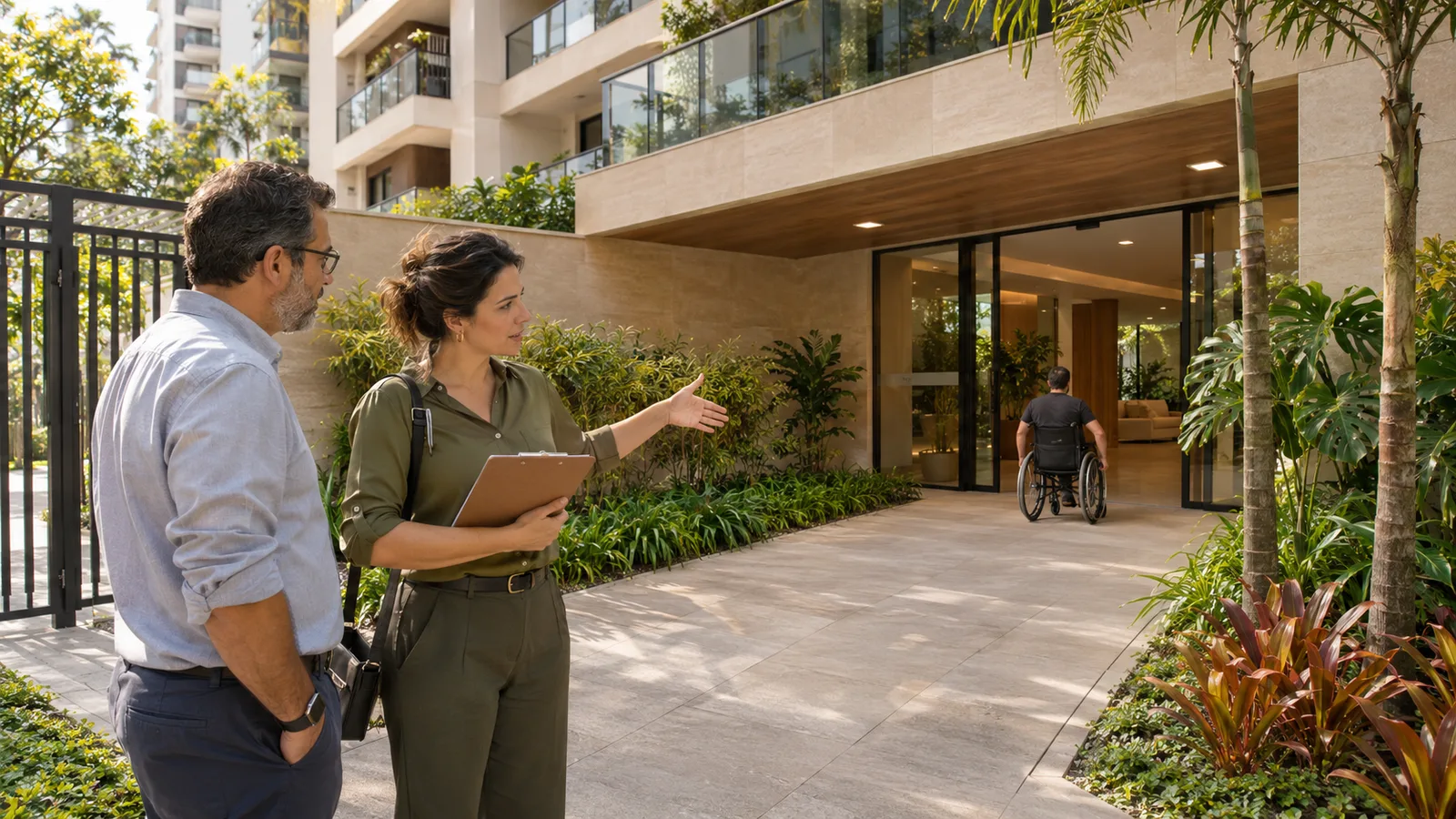
- Arrival, gates, reception and building entrances.
- Corridors, level changes, lifts and connections between spaces.
- Parking areas and pedestrian routes to entrances.
- Relevant shared lounges, social and leisure spaces and common toilets.
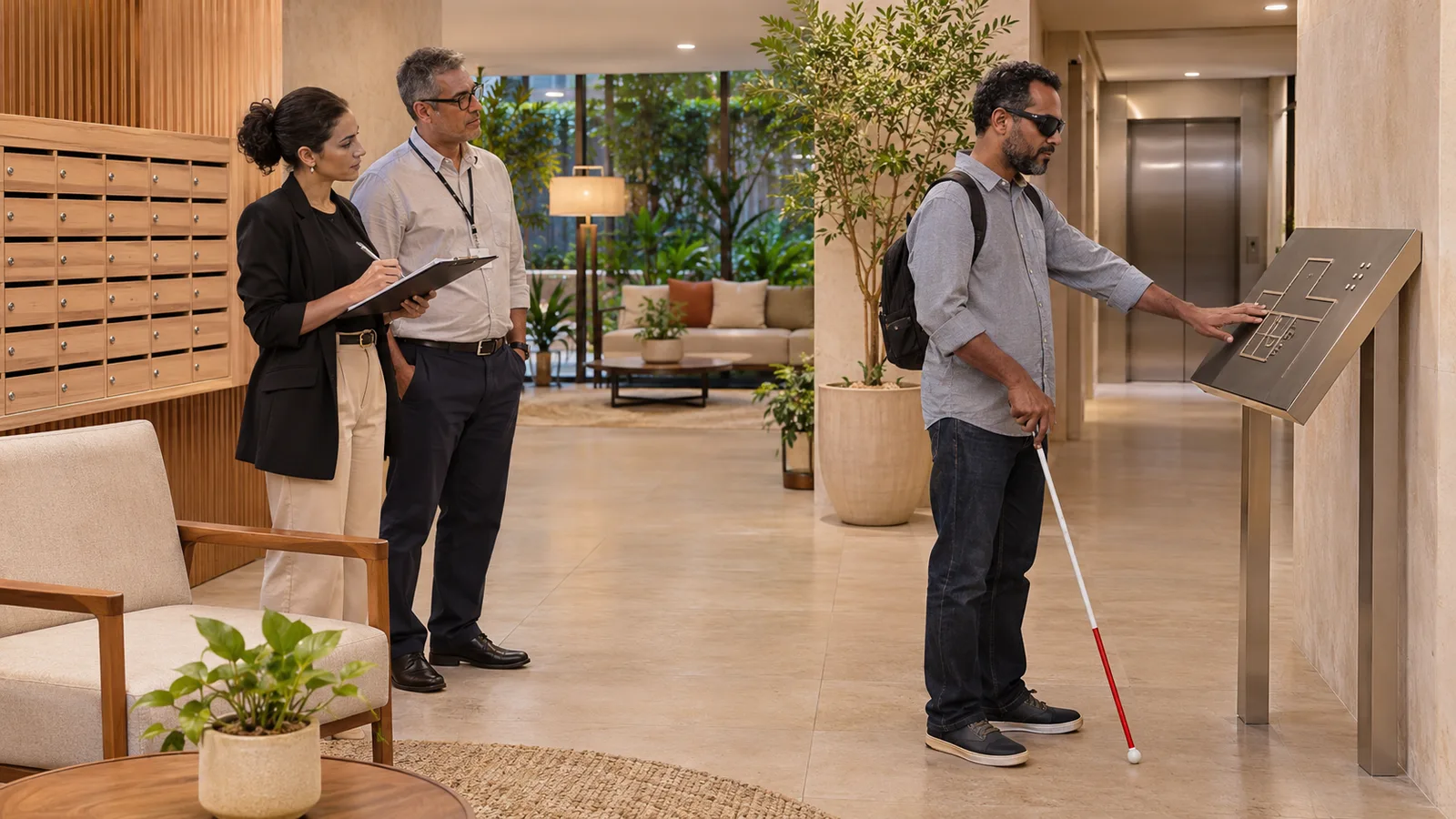
- Furniture, signage and approach and use conditions.
How should new and older condominiums be considered?
The Decree No. 9,451/2018 regulates accessibility in the design and construction of private multifamily residential buildings, including common areas. Its scope and exceptions must be considered; it does not automatically apply in the same way to every existing building.
A property's age does not replace technical assessment and review of applicable rules. Distinguish accessibility duties from a document requirement: see when a report may be required.
What should the manager organise for the visit?
Gather available drawings, alteration records, previous reports and any notices. Describe access restrictions and difficulties reported by users while protecting personal information. Private units should not be assumed to form part of a common-area assessment.
Arrange access and accompaniment with management. See how to prepare the property for an inspection.
How can the assessment inform planning?
Imagine that the lobby allows circulation but a level change interrupts the route to the shared events room. This hypothetical example shows why an accessible entrance alone does not resolve every journey.
Present findings to management and organise priorities, design work and budgets. An accessibility adaptation plan can support this process. Phasing must consider applicable requirements and safe use during construction; budget approval does not demonstrate completion or conformity.
Need to assess your condominium's common areas in Brazil?
Explore Acessibilize's accessibility report service and share the city, condominium type and assessment objective. Let's discuss the scope and next steps.