Producers and organizers
To incorporate accessibility into the planning and staging of cultural events.

Culture, art and participation
Functional and inclusive projects for cultural events and art exhibitions, integrating aesthetics, safety and accessibility from the planning stage.
Art and culture with more access possibilities. Spaces designed for autonomy, comfort and participation.
Direct answer
It is the planning of the conditions of access, circulation and use of the spaces of an event or exhibition, considering different audiences and the relationship between the environment, signage and the cultural experience.
Acessibilize develops solutions that integrate the aesthetic proposal with the functional needs of the space. The work considers applicable technical standards, such as ABNT NBR 9050, and the characteristics of the location, audience and programming.
From arrival to the exhibition route, we seek to reduce barriers to provide autonomy, comfort and a more inclusive and engaging cultural experience.
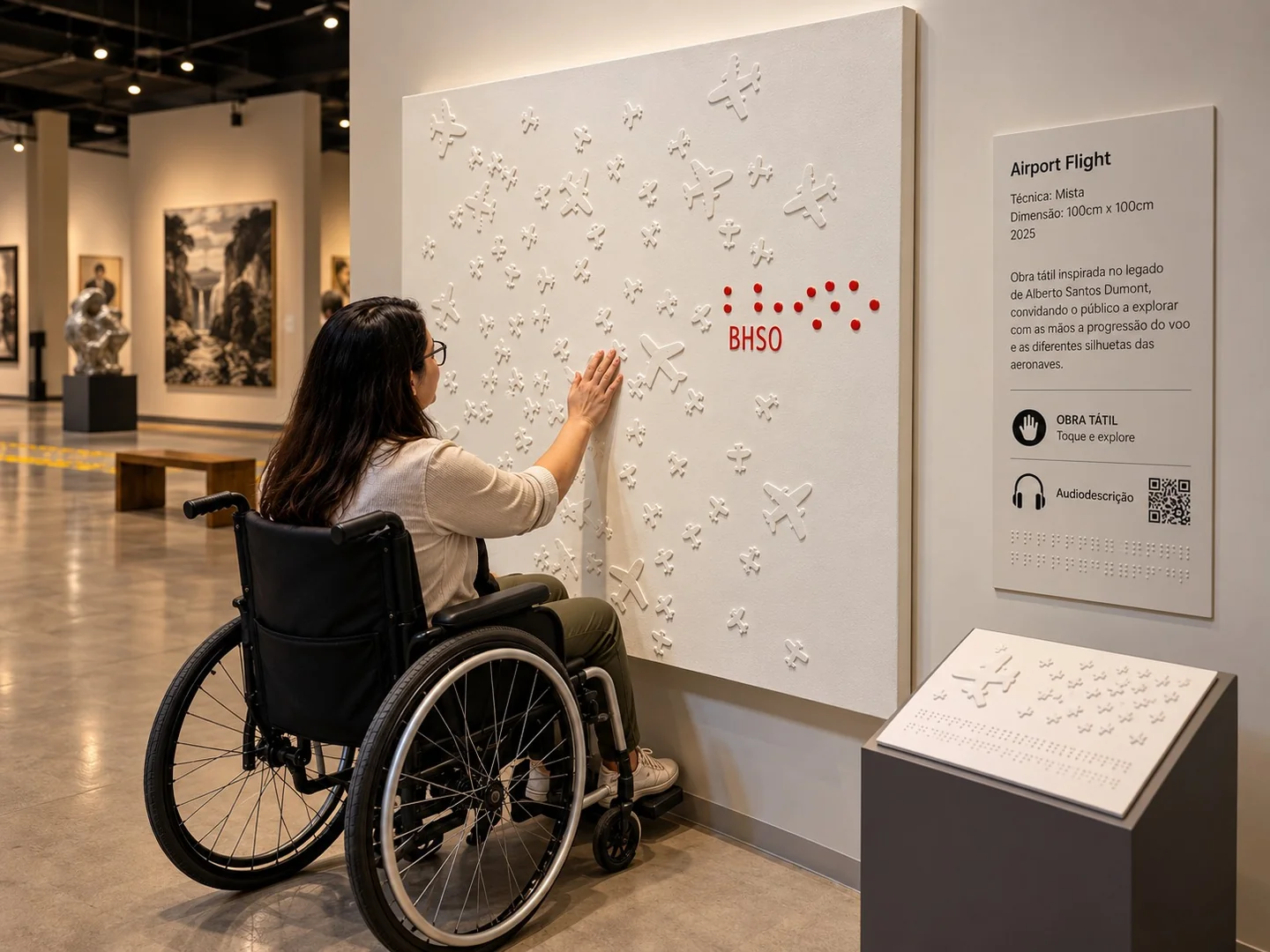
To incorporate accessibility into the planning and staging of cultural events.
To organize routes and exhibitions that consider different ways of visiting and interacting.
To reconcile the exhibition concept with adequate circulation, visibility, heights and ranges.
To assess environmental conditions and guide temporary or permanent adaptations.
Deliveries are defined according to need: space analysis, technical recommendations, layout review or project development. Communication and cultural mediation resources that depend on other specialties must be planned and coordinated with the responsible teams.
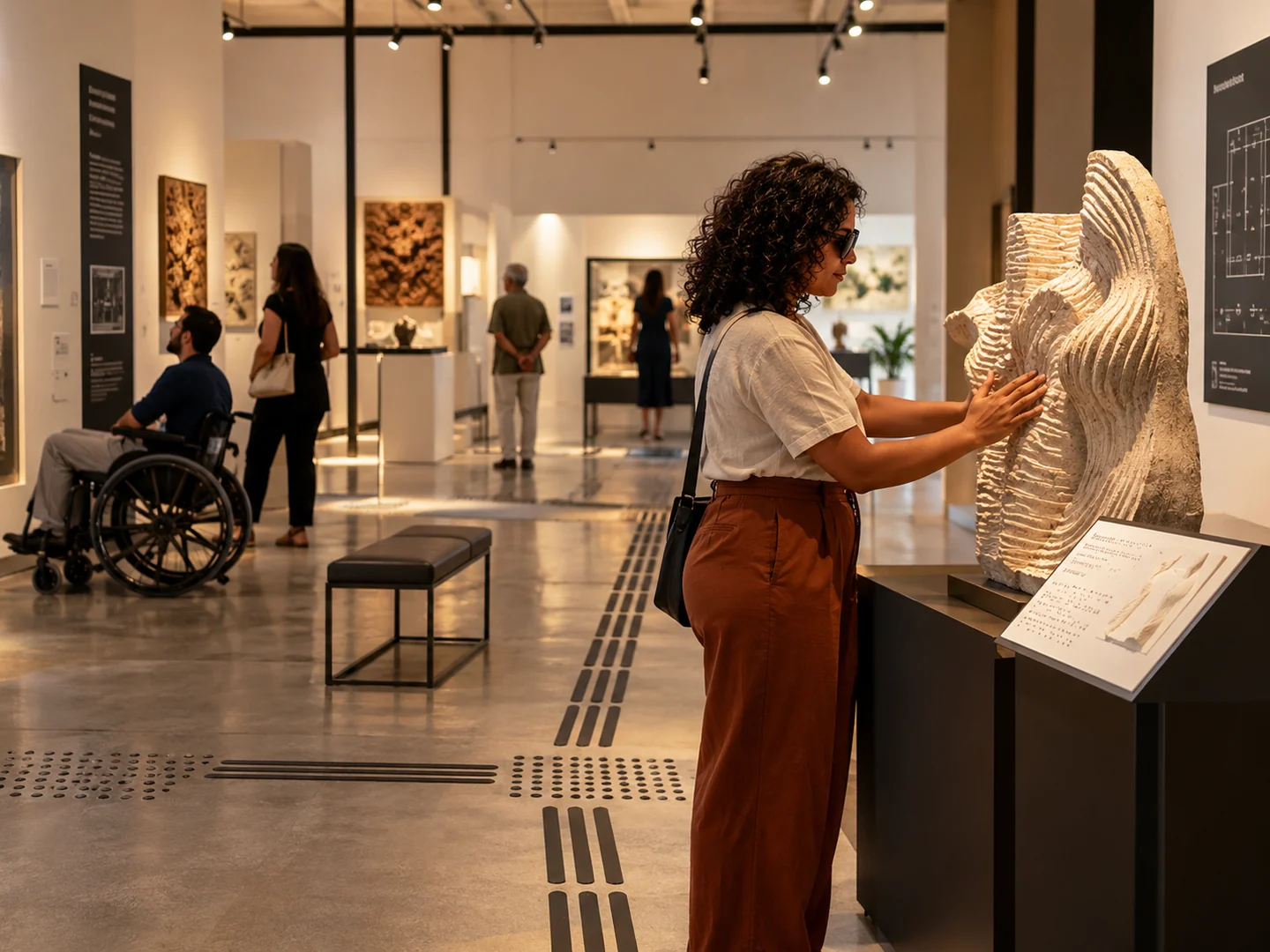
Early assessment allows you to discuss alternatives while layout and assembly are still in development. If the event is already planned, we can also analyze the proposal and indicate priorities for adaptation.
In addition to the dates and layout, inform which spaces will be open to the public, arrival conditions, assembly times and resources already planned by the production. In rented locations, defining responsibilities between space, organization and suppliers helps avoid gaps.
Reviewing a plant does not replace checking the assembly carried out. Visits during assembly, production guidance and final conference must be combined in the proposal, respecting the schedule and the possibility of making adjustments.
Physical accessibility, communication and cultural mediation need to talk to each other. Services such as audio description, interpretation in Libras and production of accessible materials require professionals and their own scope; are not automatically included in architectural consultancy.
To prepare the visit and assembly, read the guide accessibility in museums and exhibitions: route, expography and planning.
Yes. Planning may consider temporary installations and permanent spaces, according to site conditions and period of use.
Yes. We analyze available documents and space conditions to guide adjustments to circulation, routes, signage and arrangement of exhibition elements.
These deliveries can be part of the contracting process. The scope defines which analyses, projects, visits and monitoring steps will be carried out.
No. We consider different needs for mobility, orientation and use of space, as well as heights, reach, visual and tactile information. Solutions are defined based on the context and audiences of the event.
Inform the type of event or exhibition, location, dates, expected audience and planning stage. Plans, layouts, and space records help define scope.
Also discover our architectural accessibility project and a specialized consultancy, or return to list of services.
Your next event starts with planning
Tell us about the exhibition or event, the space and the schedule. We will define the necessary technical support.
Request consultancy