
Guidance for architectural decisions
Architectural accessibility consulting: when to hire and how it works
Understand how an expert review can support your team, what information to prepare and how to transform recommendations into next steps.
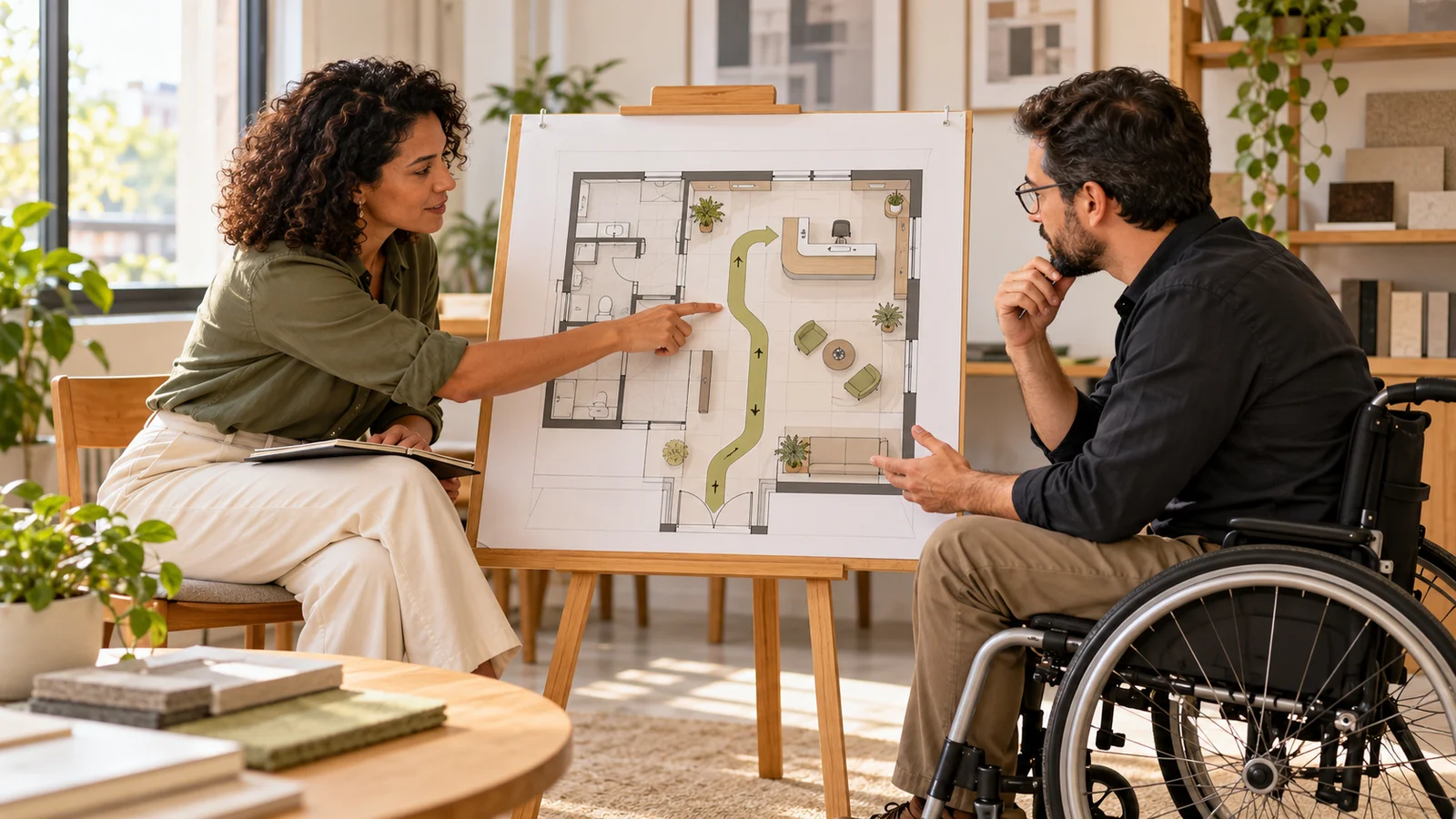
Architectural accessibility consultancy offers informed guidance on issues specific to a project or building. Can support the review of designs, the comparison of alternatives and management decisions. Documents analyzed, visits and form of feedback need to be defined when hiring.
When can accessibility consultancy help?
Seek support when your team needs to clarify an issue before moving forward: review a layout, discuss access, evaluate interference or understand what information is missing to decide.
O CAU describes consultancy as advice on specific issues, with a technical basis. This helps to distinguish the service from an informal conversation or a generic approval of the enterprise.
The work can serve managers, owners and architecture and engineering teams. In a network of units, for example, it can guide analysis criteria, without assuming that different properties accept the same solution.
When the question involves licensing, forward the request received and identify the responsible body. Technical guidance does not replace administrative decisions nor does it dispense with checking the rules applicable to the case.
How does the review of projects and alternatives work?
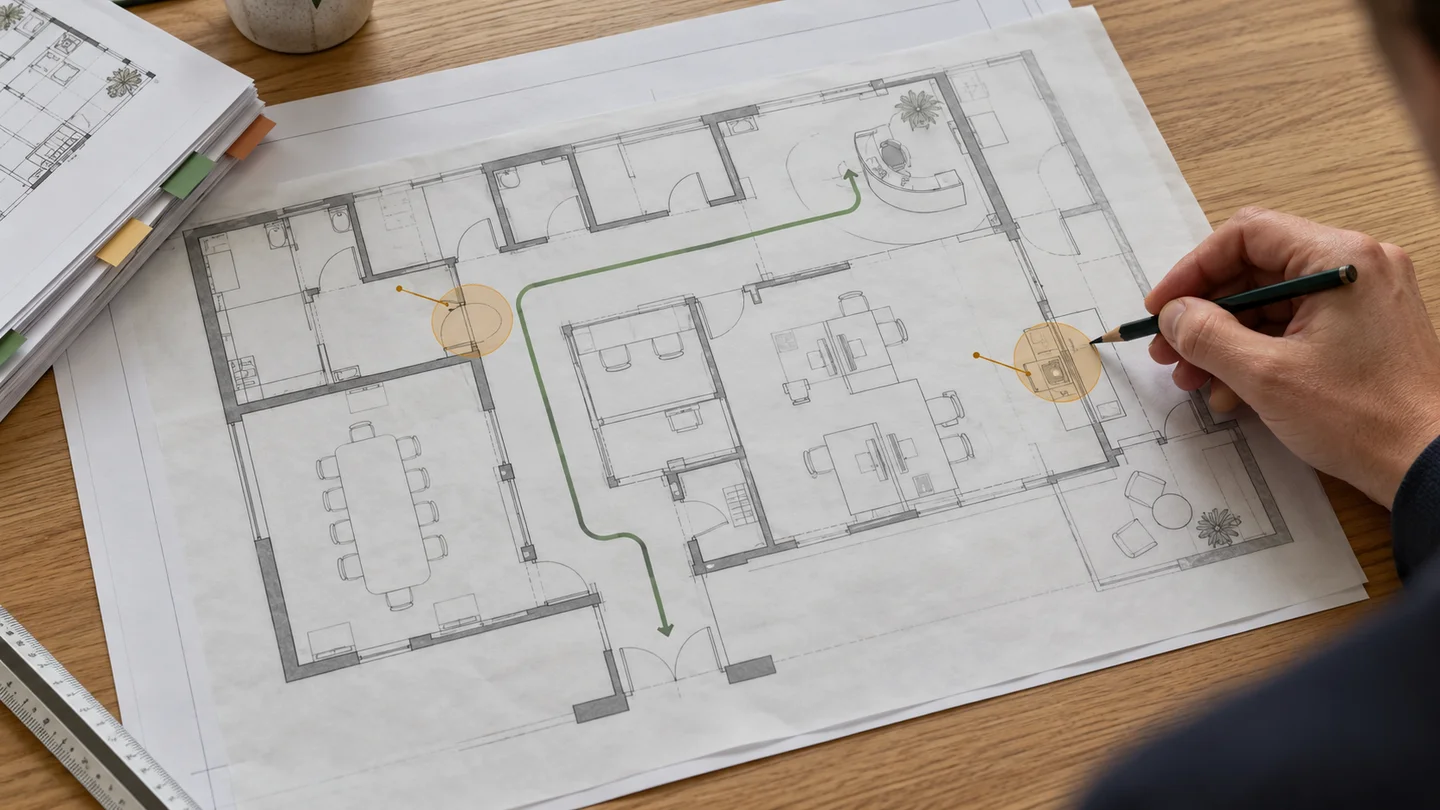
The starting point is a defined question and set of information. The analysis relates what appears in the drawings to the planned activity, the routes and the conditions of use of the environments.
Imagine an office that wants to add a new meeting room next to the reception. The review can examine how the change affects circulation and approach to care, rather than just looking at the added room.
When there are alternatives, it is important to record conditions and information still necessary. An apparently simple option may depend on surveying, detailing or evaluating another specialty before being adopted.
The review must identify the version of the files examined and the limits of the work. If the design changes later, the previous conclusion cannot be automatically applied to the new layout.
What information should you prepare for hiring?
Start by describing the decision you need to make. “We want to review circulation before ordering furniture” is a clearer request than just asking for an accessibility analysis.
- Inform city, property activity and stage of development.
- Send legible plans, dates and identification of versions.
- Gather available photographs, surveys and diagnoses.
- Submit questions, operating restrictions and intended deadline.
- Indicate who develops the project and who approves decisions by the contractor.
If documents are missing, please report this from the beginning. The consultancy may need supplementation before answering the question, and this need must be addressed in the scope.
Some document reviews may begin remotely. Conclusions about measures and built conditions depend on verifiable information and, depending on the objective, on-site survey. Isolated photographs do not reveal all barriers.
What deliverables and limits need to be clear?
The feedback may include recorded recommendations, commented drawings, technical meetings or opinions, depending on the service contracted. The format needs to allow understanding what was analyzed and what outstanding issues remain.
As CAU guidelines for hiring reinforce the importance of defining services, stages, values and deadlines. In the consultancy, also clarify:
- Issues and areas covered by the analysis.
- Documents and information considered as basis.
- Number of meetings, visits and review rounds.
- Form of recording recommendations and clarifications.
- Technical responsibilities and activities not included.
Analysis of a section of the project is not equivalent to validation of the whole. It also does not automatically include executive design, budget, execution, construction supervision or administrative approval.
Summary references are not enough to resolve all cases. A presentation of the Confea Accessibility Booklet highlights the need to fully consult legislation and standards. The analysis must use the requirements relevant to the situation examined.
How to apply the recommendations received?
Agree who will review the drawings, provide additional data and decide on alternatives. A list of observations without responsible may remain pending until the purchase of materials or the start of work.
Organize each referral with the identified issue, the required action and the document to update. Questions about interpretation should be addressed to the responsible professional, not resolved by assumption.
After the changes, check if a new round of analysis is planned. A recommendation not implemented, or applied differently, should not be recorded as resolved.
On networks, keep history per unit. Common criteria help organize management, but do not replace reading the conditions and limitations of each property.
When are a report, project or monitoring necessary?
If the objective is to diagnose existing conditions, consider hiring one accessibility report. If it is necessary to develop and detail solutions, the path can be one accessibility project.
To monitor the implementation, define a specific contract, with frequency, clear activities and responsibilities. Consultancy on drawings does not prove that the execution corresponds to what was recommended.
The scope can bring together complementary activities, as long as they are expressed in the proposal. Get to know Acessibilize accessibility consultancy and present your team's needs.
Do you have an accessibility decision ahead of you?
Tell us what the question is, the stage of the work and the documents available to define the necessary support.
Discuss your consulting needs